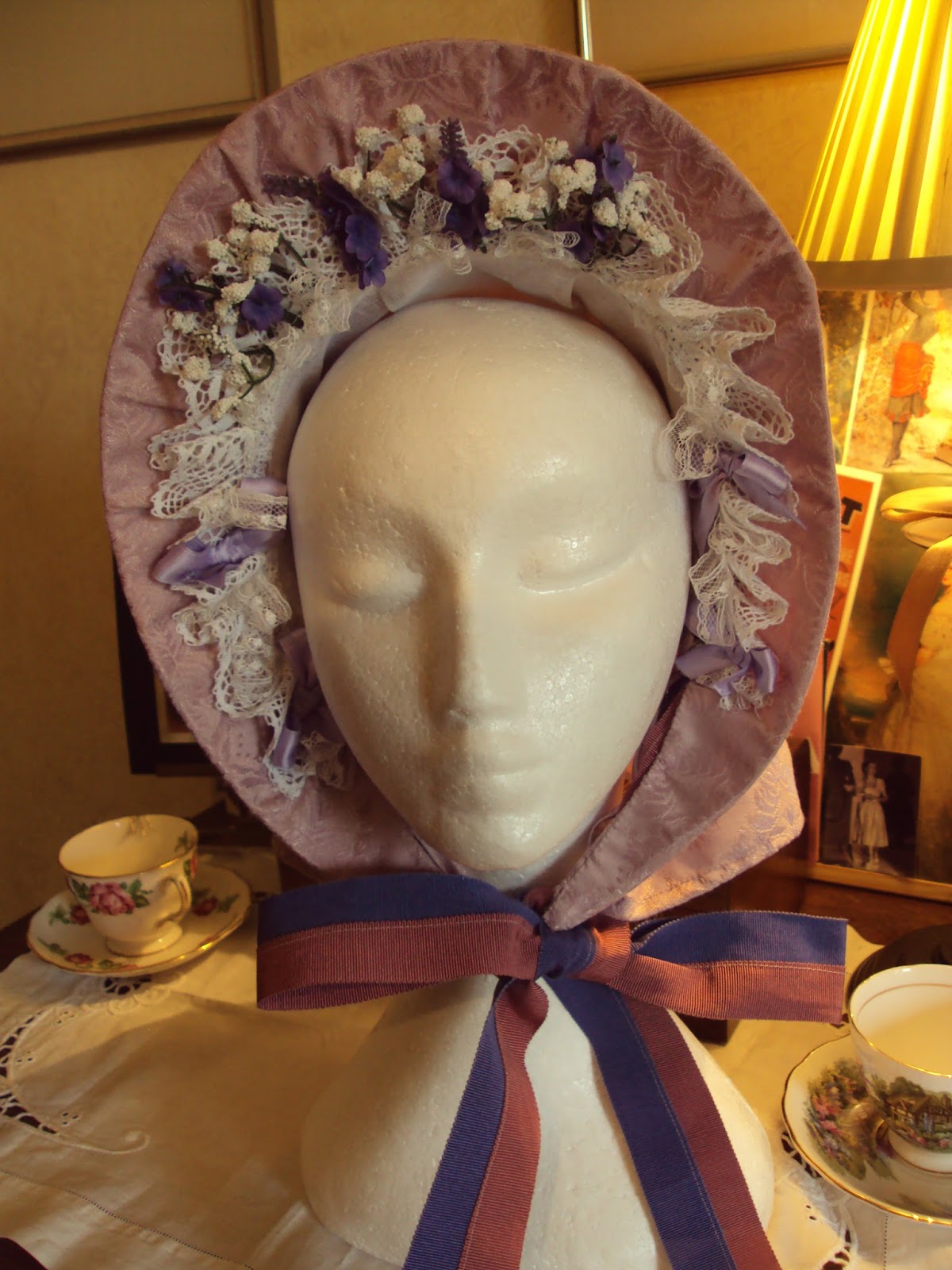
The Challenge:
June - Out-of-your-comfort-zone
July - Accessorise
And technically this also qualifies for March's stash-busting challenge as I was so eager to get started with this project that I deliberately planned to use only materials that I already had to hand without ordering anything new.
Fabric:
The fabric is a synthetic curtaining fabric that has a very nice finish that looks the part without costing the earth. It is a light fabric and nice to handle and sits well.
Pattern:
I used Timely Tresses "Eliza Coretta" pattern to create this bonnet.
Year:
1860-1862
Notions:
Millinery seems to involve a whole host of bits and pieces:
For the structure of the bonnet I used buckram for the headpiece and tip and millinery wire covered in net to form the brim.
The decorations consist of ruffled synthetic white lace; artificial flowers (fabric and plastic); small satin ribbon bows; and gros-grain ribbon ties formed from two pieces of antique ribbon in different shades.
How historically accurate is it?
The shape and style of the bonnet are very accurate for this period. Timely Tresses' patterns are very well-researched and based on extant bonnets. The decoration is also based on my own research into original bonnets and closely follows the tastes and trends of the period and the construction techniques are authentic. With the exception of the bavolet (curtain) hem, the whole bonnet is hand sewn. However, the majority of the materials are modern substitutes. The gros-grain ties are nineteenth-century antique ribbons but the main bonnet fabric and decorations are made of synthetic materials chosen with an eye to achieving as authentic a look as possible with available materials and without breaking the bank!
Hours to complete:
Approximately sixteen hours in total spread over three days.
First worn:
I wore the bonnet briefly to try the overall effect in the mirror but I will be selling the bonnet. When I started out, I had originally intended to wear this bonnet with my 1850s walking dress which is made in the same material. However, I got a little carried away combining lace and flowers when I was trimming the bonnet and although the look is very authentic it is now a little too frilly and floral to go with the dress. Hopefully somebody else will have a dress just waiting for the perfect accessory or maybe it will inspire a new costume for somebody.
If you are interested in this bonnet and other items, please visit my sister blog: http://la-belle-modiste.blogspot.co.uk/
Total cost:
I don't have an exact figure as all of the materials that I used for this bonnet were bought some time ago. However, including the kit with the materials for the frame, the fabric and the decorations, I would estimate something in the region of £40-50 for the materials.